
12.16.25
Hope: What's the use?

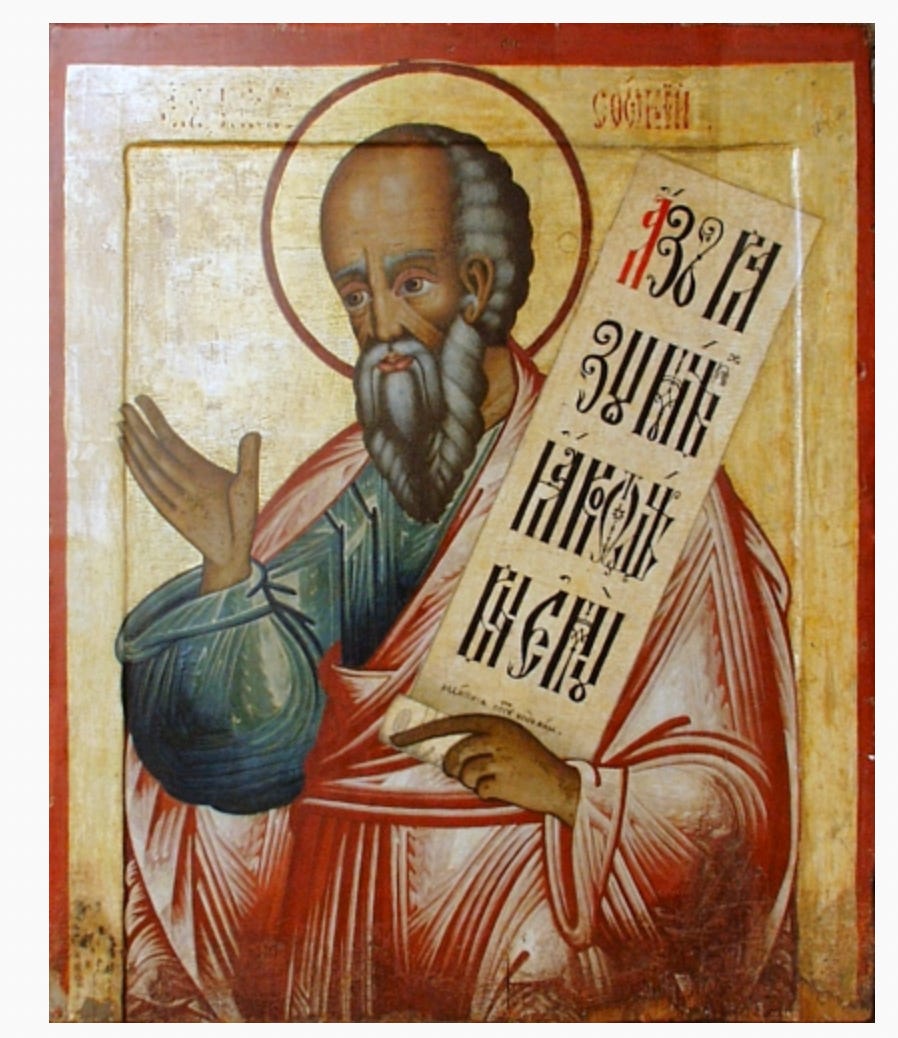
I was visiting family this weekend and we went to church. The pastor, Sam, had been preaching during the weeks leading up to Christmas by recalling Advents a bit more recent than the no-room-at-the-inn days. Sunday, he talked about Japan’s attack on Pearl Harbor, on December 7, 1941. When people came to the harbor to view the wreckage, he said, they stood on the shore and sang Christmas carols. One of them was “Joy to the World.”
How could they feel joy amid such devastation – gazing at the watery graves of their fellow sailors, neighbors, and family members? The Bible verses the pastor turned to were from the book of Zephaniah, who lived in Jerusalem during the Kingdom of Judea, under two corrupt and idol-worshiping cults of Baal and Astarte and before the reforms of Josiah, in the early-600s BC. Zeph prophesied the evil city’s downfall — “The whole world will be consumed by the fire of my jealous anger,” says God — and its restoration to godliness:
On that day the announcement to Jerusalem will be, “Cheer up, Zion! Don’t be afraid! For the LORD your God is living among you. He is a mighty savior. He will take delight in you with gladness. With his love, he will calm all your fears. He will rejoice over you with joyful songs.”
Zephaniah didn’t get to see those reforms himself, and the good times didn’t last. A few decades later, Babylon occupied Jerusalem, destroyed the First Temple, and sent the Jews into exile.
The pastor reassured the congregation that if they’d never heard of Zephaniah, they were not alone. He was one of the Old Testament’s twelve minor prophets—so minor that he rated only three verses. (I had my doubts too: Blame the cheesy translation perhaps, but what Jewish God ever said “Cheer up”?)
Anyway, the message of the sermon was that joy is not something reserved for the good times. If you put it off until the tragedy and confusion are over, you will never get there. There is joy even at times of despair, Sam said. Its source, for the faithful, is God’s love.
For those of us whose faith is only in humankind (and maybe in the earth and its creatures) it is not so easy to feel good these days, let alone joyful. The events of this weekend stood out as particularly depressing: two mass shootings and the murder of the beloved filmmaker Rob Reiner and his wife by their very troubled son. We’re living through corruption, idol worship, and political disaster with no end in sight, and climate catastrophe more and more likely after that.
If we’re waiting for better times to start feeling joyous, we might not live that long.
Of course, we on the left, including atheists like me, are not without faith—belief in a truth against all evidence to the contrary. A less certain word than faith would be hope. But here’s my question: Hope—what’s the use? Do we need it?
I’ve recently discovered a sub-genre of literature that meditates on this question. The writers are largely long-term, committed climate activists, most of them young enough to envision their own dystopian futures and some of them contemplating whether to have children whose futures look more dystopian than their own. For climate activists this is always a live question. But it’s relevant for anyone trying to make things better before they get much, much worse.
Some of these writers insist on hope as a necessity. Preeminent among them is the American essayist Rebecca Solnit, our evangelist of hope. Her titles attest to it: Hope in the Dark and A Paradise Built in Hell: The Extraordinary Communities that Arise in Disaster. Not Too Late, for instance. Changing the Climate Story from Despair to Possibility, an anthology edited with Thelma Young Lutunatabua, was published in 2023, late in the game for changing the story.
On the other end of the spectrum are the hope-agnostic. The titles also announce their authors’ predilections. There’s Warmth: Coming of Age at the End of Our World, by the policy advocate Daniel Sherrell; Ben Ehrenreich’s Desert Notebooks: A Road Map to the End of Time. Bill McKibben’s bestseller The End of Nature was the first book to sound the alarm about global warming, in 1989. If you can think of a grimmer title, LMK.
Most recent is Learning to Live in the Dark: Essays in a Time of Catastrophe, by Wen Stephenson, a climate journalist and veteran direct-action activist. Stephenson is not a hoper. “People who talk a lot about hope are always trying to make the case for it,” he said in an interview. “They’re always trying to reason their way into hope.” Given current ecological and political realities, “that is no longer possible.”
Yet Stephenson has not given up on activism, in climate politics and other politics (“The only thing worse than climate catastrophe is climate catastrophe plus fascism,” he writes). Sherrell and Ehrenreich have not either. McKibben is looking positively sunny. His latest book, Here Comes the Sun: A Last Chance for the Climate and a Fresh Chance for Civilization (Norton, 2025), argues that solar energy is a mature enough industry that it could slow and mitigate, even if it cannot arrest, climate catastrophe.
That is, if – an enormous if – nations, corporations, and scientists can swiftly get on the same team. That the global COP30 climate summit in Brazil failed to agree on reducing fossil fuels—even with the U.S. absent — is not encouraging.
But hopeful or skeptical, these writers have one thing in common: They reject despair as a paralyzing emotion, an inexcusable excuse for inaction. Yes, we’re fucked, they all agree. But we can be more fucked or less, more quickly or more slowly done for. Some places on earth, most of them in the Global South, are already at the precipice, thanks to the profligacy of the wealthy nations. It is therefore imperative for us to act to forestall the point of no return.
The other thing these activist-writers agree on is that we cannot fully know the future. We have science, but we have no prophets of doom or salvation or, like Zephaniah, of both. Solnit, with her tropism toward human goodwill and her antennae for victorious progressive struggles in history, is buoyed by hope for the future.
Stephenson, not so much. He insists that we don’t need hope. What we need is resolve to act, he says, no matter what we feel. That sounds right to me.
But here’s the thing: You can feel joy when hope is distant. Think of Black joy—the celebration of all fabulous things Black, even, maybe especially, at the worst of times. Action requires resolve. But resolve isn’t the end of it. In my experience, action feeds hope, and hope can feel almost like joy.
Thanks for this terrific post and the recommendations of authors with hope and those more skeptical.
I will reread and think...as I continue to figure out actions I can take.
Cheers.
I appreciate the recommendation on climate books and their authors view points. Thanks for sharing!